Originally posted June 5, 2025, updated August 20, 2026.
As brands grow, there’s a natural need to transition to a warehouse, multiple nodes, and, eventually, a robust fulfillment network across top 3PL locations. The goal of this expansion is to optimize distribution and delivery, ensuring that stock is near where it needs to be and shipping to customers is swift and cost-effective.
When the time comes to make this transition, selecting the right partners and fulfillment locations is critical. And you can’t just think about what’s needed now—planning longer-term is just as important. For example, you may only need one fulfillment center to begin, but what about three or five years from now? Will the logistics partner you’re considering be able to support the future locations you may require?
While there’s no perfect answer for when and how a brand will grow or what fulfillment needs it’ll have in five years, it’s possible to identify partners and locations with the strongest potential.
By assessing fulfillment location values, where specific industries often fulfill from, and which 3PLs and other logistics providers have an extensive network, retailers can make strategic choices that encourage frictionless growth.
Why fulfillment locations matter
Does location really matter? The answer is a resounding yes. And not for just one reason, but many. Location determines everything from shipping costs and speeds to labor availability and industry regulations. In other words, the wrong location can cost you. Some of the top reasons to carefully consider locations include:
Meeting delivery expectations
Fast and free may have set the standard for retail delivery, but consumers now expect brands to deliver on both without adding checkout friction. According to a 2026 Home Delivery Survey, 94% of consumers say free shipping affects their purchase decision, while more than 70% say it has a significant impact. At the same time, consumers expect free delivery within an average of 2.7 days. Those expectations make fulfillment center location increasingly important, particularly as brands try to control parcel costs without extending delivery times.
That pressure becomes especially apparent at checkout. More than 90% of U.S. consumers say they are likely to abandon an online purchase when faced with high shipping costs, according to McKinsey. DHL’s 2026 global e-commerce study also found that 67% of online shoppers have abandoned a cart because of the delivery offering, with free shipping ranking as the top factor that would encourage shoppers to complete a purchase.
Where inventory sits can directly affect that equation. U.S. parcel networks use shipping zones that generally increase with the distance between the fulfillment origin and destination. When products are positioned closer to major customer markets, brands can reduce the distance orders travel and limit their reliance on higher-cost shipping zones or expedited services. The same network strategy can support replenishment to retailers and stores while helping keep delivery costs manageable. Instead of chasing speed at any cost, the goal is to place inventory where it can reach customers within the delivery window they expect at a cost the brand can sustain.
Reducing fulfillment costs
Shipping is only one small piece of the fulfillment cost puzzle. While it’s a big part, other factors matter too. For instance, consider the cost of living by geographic area. Groceries, gas, rent/mortgage, home services, etc., are all a lot higher in New York City than in New Jersey, which is why you often find people choosing to live on the outskirts.
The same applies to business or fulfillment locations. The ideal fulfillment center will be near major hubs with easy transportation access to keep costs down. On the flip side, being located rurally can drive up delivery transit times because it has more limited access to transportation infrastructure. This can affect predictable delivery windows and tack on shipping costs. So, while rent may be low, it can drive up costs in other ways and impact the customer experience.
Easier channel expansion
Many brands expand from DTC fulfillment to multiple channels (omnichannel fulfillment), This can include marketplaces, retail/wholesale, and Tiktok Shop.
It’s easier for these retailers to scale near major retail hubs and/or transportation routes. This helps them meet delivery windows and compliance standards better while reducing delays. The key to strategic positioning is locating in a way that simplifies logistics coordination and makes scaling easier.
Manageable regulations
Fulfillment regulations can vary by state, including tax nexus, labor laws, and environmental requirements. Retailers using fulfillment locations in states with stricter regulations may face added compliance requirements, longer processing times, or higher operational costs, so due diligence is essential to determine which location optimizes efficiency.
Access to a robust workforce
Access to a strong and reliable labor force allows fulfillment centers to help retailers run efficient operations and scale cost-effectively. Brands must consider the risk of shortages in different regions, which can lead to high turnover, delays, and higher wages that disrupt fulfillment operations.
Increased resilience and agility
Some fulfillment locations provide resiliency and agility through geographic diversity. This allows brands to remain nimble, even when facing supply chain disruptions. A region may also help brands adapt quickly to changes, whether it’s sudden spikes in demand, shifting customer locations, or market expansion.

Popular US fulfillment locations
In 2026, the top cities for fulfillment locations are a mix of long-time favorites and swiftly growing regions. For example, Global Trade named Columbus “a natural target for growth as supply chains evolve,” citing its advantage for both US and global operations.
Find3PLs.com featured Chicago, Dallas-Fort Worth, and Los Angeles and the Inland Empire. Another strong area is Pennsylvania and the Lehigh Valley, which reaches about 40% of the US and Canadian population within a single day’s drive.
Location matters, but so does having the right partner for your product in areas that fit your customer base.
How to find the right fulfillment partner based on location
Before choosing a fulfillment location and logistics partner, brands should assess their situation; for example, current operations, customer base, and growth plans, to identify key needs and what matters most. This means looking at:
- Where customers are concentrated
- What channels you plan to expand into
- Product storage and compliance needs
- Industry norms for shipping and delivery times (specific to your products)
The ideal 3PL will have fulfillment locations that align with brand goals. They’ll also have the expertise to set up retailers in a way that supports long-term scalability, flexibility, and consistent service across all sales channels.
Kase US fulfillment locations


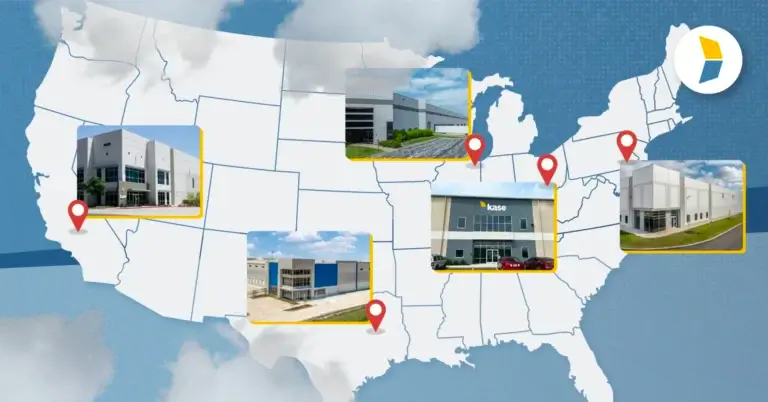
Kase’s network of strategically located warehouses in cities like Columbus, Allentown, Los Angeles, Chicago, and Dallas enables fast two-day and even same-day delivery.
Locations offer a variety of features and capabilities, from climate control, food-grade storage, and FDA registration to a comprehensive range of fulfillment services able to meet the needs of omnichannel retail operations. Locations are also optimized for transportation infrastructure, including rail access.
Brands can utilize one location or streamline shipping with multiple nodes, reducing shipping times and costs. With both ecommerce and B2B fulfillment capabilities, Kase can support retail and DTC fulfillment across the US.
Fontana, CA Kase Fulfillment Location
Our warehouse in Fontana, CA specializes in omnichannel fulfillment services across all key industries.
- 209,700 sq ft of space
- Access to 27 truck doors
- Proximity to major highways like I-15, I-10, and CA-60
- ONT and LAX airports
Columbus, OH Kase Fulfillment Location
Our FDA-registered, multi-client facility located just outside Downtown Columbus is built to handle high-volume ecommerce brands.
- 53,000 sq ft of space
- FDA-registered facility
- Proximity to major highways like I-70 and I-270
- Access to CMH, LCK, and Port of Cleveland
Sunnyvale, TX Kase Fulfillment Location
Our warehouse in Sunnyvale, TX supports omnichannel fulfillment with direct access to the greater Dallas-Fort Worth market.
- 182,369 sq ft of space
- Access to 26 truck doors, including two drive-in doors
- Proximity to major highways like I-20, I-30, US-80, I-635, and I-45
- DFW and DAL airports
Sauk Village, IL Kase Fulfillment Location
Our warehouse in Sauk Village, IL supports fulfillment operations with access to the greater Chicago market and major transportation networks.
- 496,260 sq ft of space
- Access to 50 truck doors, two drive-in doors, and 12 rail doors
- Proximity to major highways like I-80, I-57, and I-65
- MDW and ORD airports
Northampton, PA Kase Fulfillment Location
Our warehouse in Northampton, PA specializes in omnichannel fulfillment, parcel shipping, and B2B distribution.
- 150,975 sq ft of space
- Access to 21 truck doors plus one drive-in door
- Proximity to major highways like US-22/I-78 and I-476
- ABE airport
View the full list of our facilities here.
Ready to find fulfillment locations that fit today’s needs and tomorrow’s growth? Talk with a Kase fulfillment specialist and discover the perfect spot to scale smart.